
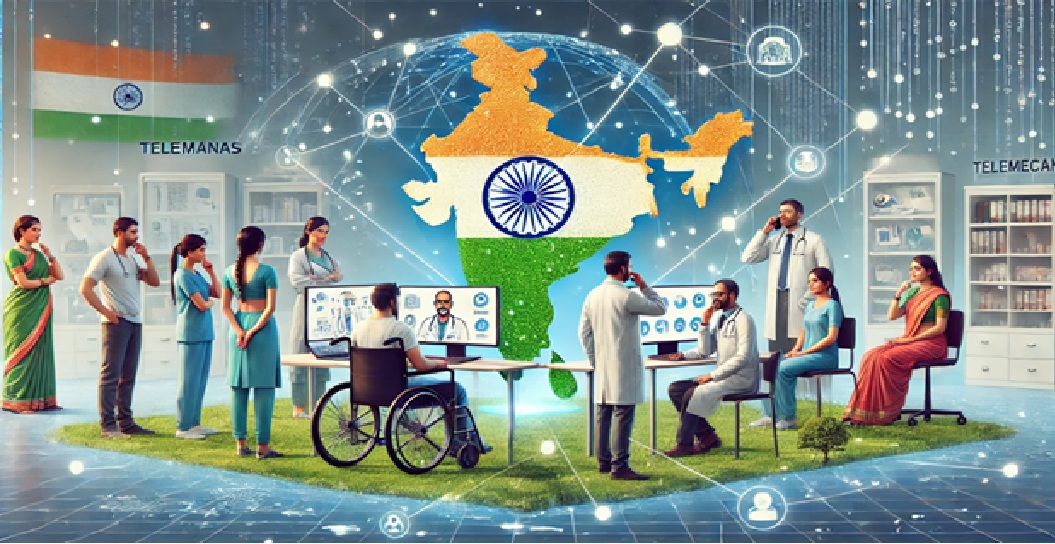
In December 2017, India President Ram Nath Kovind warned of a potential “mental health epidemic” in India, with 10 per cent of its 1.42 billion-strong population having suffered from one or more mental health problems. “In a nation of 1.3 billion (should be 1.42 billion now) people, that was a staggering figure. The number of Indians suffering from mental health problem was larger than the entire population of Japan “– he (president of India) said. Economic Times
Manas means mind.
Understanding Mental Disorders – Global Scenario in brief
A mental disorder is a clinically significant disturbance in an individual’s cognition, emotional regulation, or behavior. These conditions often lead to distress or impairment in key areas of daily functioning.
- Global Prevalence: Approximately 1 in 8 people worldwide live with a mental disorder.
- Core Aspects: Mental disorders involve significant disruptions in thinking, emotional regulation, or behavior.
- Diverse Conditions: There are many different types of mental disorders, each with unique characteristics and challenges.
- Treatment and Prevention: Effective prevention and treatment options exist, but access to quality care remains limited for many.
Mental disorders are sometimes referred to as mental health conditions, a broader term that also includes psychosocial disabilities and other mental states associated with distress, functional impairment, or risk of self-harm. This overview focuses on mental disorders as classified by the World Health Organization’s International Classification of Diseases (ICD-11).
In 2019, 970 million people—or 1 in 8 individuals globally—were living with a mental disorder, with anxiety and depressive disorders being the most common [WHO] [GBD]
The COVID-19 pandemic in 2020 further intensified the mental health crisis, leading to a sharp increase in these conditions. Early estimates indicate a 26% rise in anxiety disorders and a 28% increase in major depressive disorders within just one year [WHO]
Addressing mental health challenges requires greater awareness, early intervention, and improved access to effective care to support those affected worldwide.
Anxiety Disorder: In 2019, an estimated 301 million people, including 58 million children and adolescents, were affected by anxiety disorders. These conditions are defined by excessive fear, persistent worry, and related behavioral disturbances. [WHO]
Depression – In 2019, approximately 280 million people, including 23 million children and adolescents, were affected by depression. Unlike normal mood variations and brief emotional responses to daily challenges, depression is a persistent and serious mental health condition [WHO]
Bipolar Disorder – In 2019, approximately 40 million people were living with bipolar disorder, a condition marked by alternating depressive episodes and periods of manic symptoms. [WHO]
Post Traumatic Stress Disorder – Post-Traumatic Stress Disorder (PTSD) is particularly common in conflict-affected settings. It can arise following exposure to highly threatening or traumatic events, either as a single occurrence or a series of distressing experiences.. [WHO]
Schizophrenia – Schizophrenia affects around 24 million people worldwide, or approximately 1 in 300 individuals. People with this condition have a life expectancy that is 10 to 20 years shorter than the general population. It is characterized by significant disruptions in perception and behavior, with symptoms including persistent delusions, hallucinations, and disorganized thinking. [WHO]
Eating Disorder – In 2019, approximately 14 million people, including nearly 3 million children and adolescents, were affected by eating disorders. Conditions such as anorexia nervosa and bulimia nervosa are characterized by disordered eating patterns, an intense focus on food, and concerns about body weight and shape [WHO]
Neurodevelopmental disorders – These behavioral and cognitive disorders develop during the early stages of life and cause significant difficulties in acquiring and performing intellectual, motor, language, or social skills.
Need for introducing Tele-MANAS program – The Background
Mental Health systems and social support
There is a significant global disparity between the need for mental health treatment and its availability. Furthermore, when treatment is provided, its quality is often inadequate. For instance, only 29% of individuals with psychosis and just one-third of those with depression receive formal mental health care. [Mental Health Atlas WHO] [PLOS BILOLOGY]
People with mental disorders also require:
- Social support encompasses assistance in building and sustaining personal, family, and social relationships.
- They also require support for educational programs, employment, housing, and engagement in other meaningful activities.
WHO responds.
WHO’s Comprehensive Mental Health Action Plan 2013-2030 recognizes the essential role of mental health in achieving health for all people. The plan includes 4 major objectives:
- To enhance strong leadership and governance in mental health.
- To deliver holistic, integrated, and responsive mental health and social care services within community-based settings.
- To execute strategies for promoting mental health and preventing disorders ; and
- To enhance information systems, research, and evidence for mental health..
It is expected that the member states of WHO will follow the guidelines as set out by WHO.
Depression and anxiety disorders are widespread and debilitating conditions that not only cause significant human suffering and health loss but also lead to substantial economic impact.
India, being a developing country has been bothered by the mental illness of its citizens since long, like other countries in the world. Mental illness, most of the times being suppressed due to social stigma and taboo, reduces the ability to work, in case of illness like Depressive disorder, stress disorder or even completely lost the work force in case of suicide.
In case of Suicide, Financial burden on the society is enormous and India is no exception. The following statistics give an idea why Govt. of India is so much concern about mental illness of its citizens now:
The aim of this study was to estimate the economic cost of suicide in India in 2015.
Materials and Methods:
The calculation of years of presumed life lost and total years of life lived (TYLL) was based on official 2015 data on suicides and life expectancy. Market rates and official estimates of various expenditures, both before and after suicide, were used to assess losses and gains. The total cost was derived from the difference between income and expenditure.
Results:
In 2015, a total of 133,623 individuals died by suicide.
- They lost 4,349,158 years in total while living for slightly more period of 4,777,293 years.
- Post suicide, the expenses were 152,233.8 trillion with a saving of 29,200 trillion. Throughout their lifetimes, these individuals generated an income of 1,672,198 trillion and incurred costs amounting to 320,739.3 trillion.
- The net cost of suicide was ‘ 149,313.9 trillion.
Although suicide cannot be fully prevented, effective, tailored prevention strategies can help minimize substantial financial losses. [Financial Aspects of Indian Suicide 2015]
Acknowledging the mental health crisis, Govt. of India announced to establish a new milestone on World Mental Health Day last year (in the Union Budget 2022 – 2023) 10th October 2022, Tele Mental Health Assistance and Networking across States, known as Tele MANAS.
In response to the COVID-19 pandemic and the pressing need for a resilient digital mental health network, this initiative seeks to offer free, 24/7 tele-mental health services nationwide, with a special focus on reaching individuals in remote and underserved areas.
A toll-free, 24/7 helpline number (14416 or 1-800-891-4416) is now available as part of the initiative.
Objectives of Introducing Tele-MANAS Program
- To make people aware that Mental illness is a Socio-Economic problem.
- To connect with people in remote areas online.
- To offer an anonymous platform to Indian citizens to overcome social stigma and taboos.
- To make people feel confident to open-up as, patient data will not be disclosed.
- To generate a database for citizens of India
- Through this initiative, a message is sent to Indian society about the seriousness of the subject.
National Tele-Manas Health Program
Land Area of India – 32,87,263 sq. km,
No. of Federal States – 28 states and 8 Union Territories (UT)
Population – 1.42 billion
No. of recognised languages in India – 22 [Rajbhasha]
Unity in diversity is the key principle of India, upon which India, as a country, was formed. Though health is a state subject, but government launched the Tele MANAS program centrally to cater the served and unserved areas of India on equality basis.
- The program features a network of 38 tele-mental health centers of excellence across 27 states and union territories, offering mental health services in over 20 languages, supported by more than 1,600 trained counselors delivering first-line care..
- NIMHANS (National Institute of Mental Health and Neurosciences) in Bengaluru serves as the nodal center.
Mentoring institutes
‘The National Tele Mental Health Programme of India (Tele MANAS) is all set to be a landmark link between distressed individuals and mental health professionals. Through 51 State-wise Tele MANAS cells that will have trained Tele MANAS counsellors and a teams of mental health professionals, this novel enterprise by the Ministry of Health and Family Welfare (MOHFW) will be helpful in networking and boosting mental healthcare services’ – Dr. Mansukh Mandaviya – Ministry of Health and Family Welfare (MOHFW) , Government of India [Operational Guidelines – TeleMANAS]
Location of Tele-Manas centres – a part of Govt. of India initiatives:
- AIIMS (All India Institute of Medical Science) – Patna, Bihar State,
- AIIMS – Raipur, Chhattisgarh,
- CIP – Ranchi, Jharkhand,
- AIIMS – Bhopal, Madhya Pradesh,
- AIIMS – Kalyani, West Bengal,
- AIIMS – Bhubaneshwar, Odissa,
- PGIMER – Chandigarh, Punjab,
- Hospital for Mental Health – Ahmedabad, Gujarat,
- of Psychiatry and Human Behaviour – Bambolim Goa,
- AIIMS – Nagpur, Maharashtra,
- AIIMS – Jodhpur, Rajasthan,
- KGMU – Lucknow, Uttar Pradesh,
- AIIMS – Rishikesh, Uttarakhand,
- IHBAS – Delhi, Delhi,
- IGMS – Shimla, Himachal Pradesh
- Psychiatric Diseases Hospital, Govt. Medical College – Srinagar, Jammu & Kashmir,
- LGBRIMH – Tezpur, Assam
- NIMHANS – Bengaluru, Karnataka,
- IMHANS – Kozhikode, Kerala,
- IMH – Chennai, Tamil Nadu
- IMH – Hyderabad, Andhra Pradesh
- JIPMER and AIIMS, Mangala Giri.
- Other States include -Andaman and Nicobar Islands, Dadra Nagar Haveli and daman and Diu, Ladakh, Rajasthan, Telangana, West Bengal.
Under these mentoring centres there are district level centres as well.
Services offered by Tele-Manas Program
-
Disclaimer: some of the statistics may not match as, figures vary with different web-sites
National Tele Mental Health Programme of India

Debasis Chaudhuri