
Understanding Depression and Mental Health
Table of Contents
-
Introduction: The Interdependence of Human Beings
1.1 We Are Born Interdependent
1.2 The Role of Connection in Society -
Understanding Depression
2.1 Depression: A Part of Human Life
2.2 The Closed Room Metaphor
2.3 Depression and Its Impact on Functioning -
Loneliness and Its Link to Mental Health
3.1 Correlation with Psychological Conditions
3.2 Co-Morbidities Due to Loneliness -
Modern Treatments and Interventions
4.1 Depression as a Treatable Illness
4.2 Available Support Systems (Counselling, Medication, TMS) -
Defining Mental Health
5.1 More Than the Absence of Illness
5.2 Components of Mental Well-being -
Depression: Symptoms and Diagnosis
6.1 Emotional, Physical, and Cognitive Symptoms
6.2 Statistical Overview (Global and India)
6.3 Causes and Risk Factors -
Stress and Its Role in Depression
7.1 Psychological Meaning of Stress
7.2 Causes of Stress
7.3 Physical and Behavioural Outcomes -
Understanding Depressive Disorders (DD & MDD)
8.1 Characteristics and Diagnostic Criteria
8.2 Major Depressive Disorder Explained -
Depression: Risk Factors and Classification
9.1 Biological, Psychological, and Socioeconomic Triggers
9.2 Levels: Mild, Moderate, Severe -
Depression and Suicide
10.1 Global and Indian Suicide Statistics
10.2 Economic Impact of Suicide
10.3 Importance of Timely Intervention -
Financial and Societal Burden of Mental Illness
11.1 Measuring Disease Burden (YLL, YLD, DALY)
11.2 The Cost of Mental Health Issues in India -
Disability-Adjusted Life Years (DALY)
12.1 Definition and Relevance
12.2 Methods of Calculation
12.3 Insights from DALY Metrics -
Government of India’s Mental Health Initiatives
13.1 National Mental Health Policy and Legal Frameworks
13.2 Mental Healthcare Act, 2017
13.3 Tele-MANAS and Ayushman Bharat -
Global and National Mental Health Perspectives
14.1 WHO’s Findings and Recommendations
14.2 President of India’s Concern on Mental Health Epidemic -
Other Mental Health Disorders
15.1 Anxiety Disorders
15.2 Bipolar Disorder
15.3 Post-Traumatic Stress Disorder (PTSD)
15.4 Schizophrenia
15.5 Eating Disorders
15.6 Neurodevelopmental Disorders -
Conclusion: Toward a Mentally Healthier Society
16.1 Raising Awareness and Mobilizing Support
16.2 Creating an Enabling Environment
We are not Independent, but we are born interdependent.
A human being needs to depend, interact, develops relationship etc. with another human being for survival since birth. So, there is a responsibility that a human being is born with that has to do with connecting on a level with another human being. That’s how we belong to a society. This characteristic feature of interdependence of a human being is more pronounced in case of our interaction with another human being.
Depression is a part and parcel of human life, but one must understand how to manage it. Severe depression, is a mental illness, means one is inside a closed room which has no windows and doors. This means one does not want to share his / her mind or take into consideration others mind and thus leads to Depressive Disorder which affects the normal functioning of a human being, due to a feeling of rejection, fear of the past or future, losing out etc. etc.
Studies have shown a significant correlation between loneliness and the prognosis of psychological conditions like depression anxiety degree of alcoholism mood disorders and more. Loneliness can further deteriorate already existing mental health issues resulting in co-morbidities or pathology
As mental illness, for example Depressive Disorder etc., is treatable like any other illness, so a person should feel like availing of the various facilities available in the his / her surroundings in 21st century – like counselling, medication or TMS (Transcranial Magnetic Stimulation).
Mental health is a vital component of overall health—extending beyond the mere absence of mental illness. It forms the foundation for personal well-being, emotional resilience, and effective daily functioning. Mental health encompasses emotional wellness, the prevention of mental disorders, as well as timely treatment and rehabilitation.
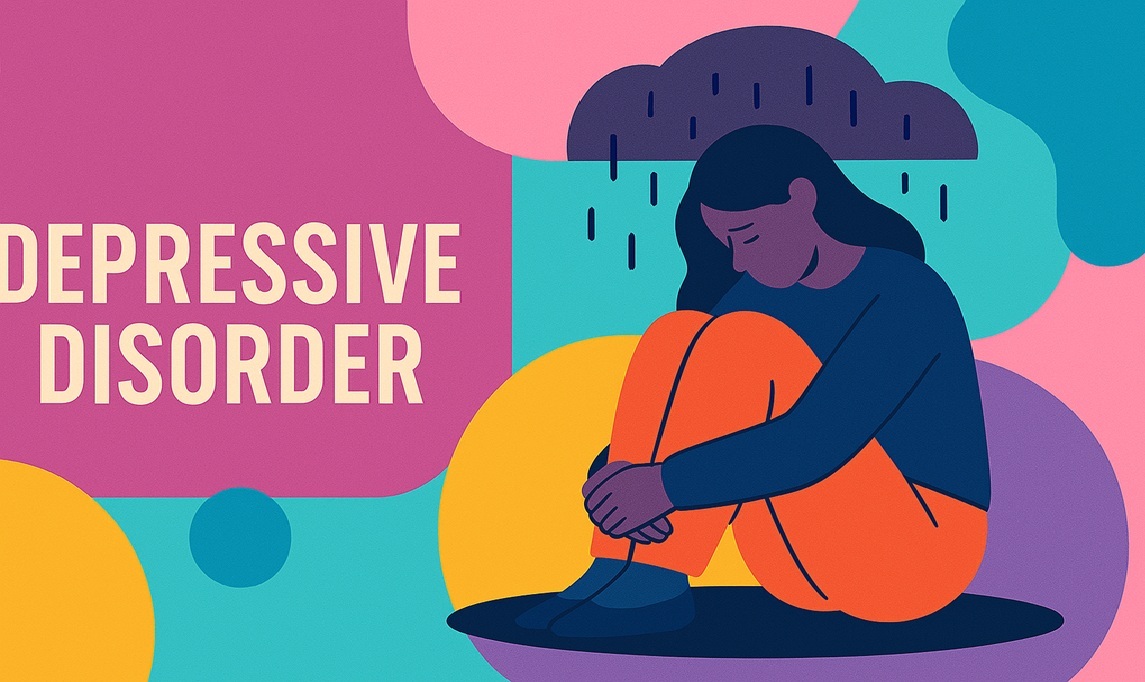
Depression causes feelings of sadness and/or a loss of interest in activities once you enjoyed. Depression, also known as major depressive disorder, is a common yet serious medical condition that adversely impacts your emotions, thoughts, and behavior. Fortunately, on a positive note, it is also treatable. It can lead to a variety of emotional and physical problems and can decrease your ability to function at work and at home and create disturbances in your relationship with others.
Key findings of this study:
- Depression is a common mental disorder.
- Globally, an estimated 6.7% of adults suffer from depression.
- Depression affects women at a higher rate than men.
- Depression may lead to suicide.
- Effective treatments are available for depression across all levels—mild, moderate, and severe.
- Govt. of India has taken cognitive steps, administrative & legal to make available cost-effective treatment to far & wide and high & low.
Approximately one in six individuals (16.6%) will experience depression at some point in their lives. While it can develop at any age, it most commonly begins in the late teens to mid-twenties.[American Psychiatric Association]
Depression is a mental state influenced by brain function. Shifts in brain chemistry—particularly imbalances in neurotransmitters like serotonin, which regulate mood, sleep, and appetite—are believed to play a key role in its development.
Symptoms of Depression
- Feeling sad (so called mood-off)
- No longer finding joy in activities that used to be fulfilling,
- Significant shifts in eating habits, causing unintended weight changes – loss or gain,
- Trouble sleeping or sleeping too much
- Loss of energy or increased fatigue
- Noticeable increase in aimless physical activity (e.g., restlessness, pacing, fidgeting) or markedly slowed movements and speech – severe enough to be apparent to others.
- Feeling worthless or guilty
- Difficulty in thinking, concentrating or making decisions
- Thoughts of death or suicide
Stress—a sense of being overwhelmed or unable to cope with life’s demands—is one of the key psychological factors that can contribute to depression.
Probable Reasons for stress:
- Unexpected behavior from one person
- Family Violence,
- Illness,
- No School,
- Problems providing for the Family,
- Displaced from home,
- Violence in the community,
- Arguments,
- Uncertainty about the future,
- Feeling of losing out,
- Unconsciously feeling Jealous.
Everyone experiences stress at times. A little bit of stress is not a problem, but very high stress often affects the body and many people get unpleasant feelings like:
Outcome of Stress
- Headaches
- Not Feeling hungry,
- Neck and Shoulder pain,
- Lump in the throat,
- Back pain,
- Stomach upset,
- Lump in the throat,
- Heavy Chest,
- Tight muscles,
- Skin rashes,
- Infections,
- Bowl problems,
- Getting sick etc.
When a human being is stressed, behaviour changes may be visible among the human being, like:
Behavioral Changes
- Get angry easily,
- Cannot sit still,
- Have disturbed sleep,
- Continuous worrying,
- Crying,
- Feel very sad,
- Having changes in appetite routine
Many of us get caught in cycles of dwelling on past hardships or worrying about future troubles. These intense thoughts and emotions are a natural response to stress. But problems occurs once we get “hooked” by them. Once a human gets hooked on to a certain stress factors / levels, persisting for some time, inevitably he / she cannot do stress management, then outcome is Depressive disorder or Major depressive disorder. [WHO]
Depressive Disorder (DD) & Major Depressive Disorder (MDD) are two common Mental – illness in modern world , characterized by:
Characteristics of DD & MDD
- Persistent low mood (sadness) and diminished enjoyment of normally pleasurable activities
- accompanied by functional impairment in daily life for a minimum duration of two weeks.
- loss of energy,
- change in appetite,
- sleeping more/less,
- anxiety,
- reduced concentration,
- indecisiveness; restlessness,
- feelings of worthlessness,
- guilt or hopelessness; and
- thoughts of self-harm or even committing suicide.
Major depressive disorder (MDD) causes ongoing sadness, trouble thinking clearly, physical changes, and problems with everyday life.
Depression has multiple risk factors –
- biological (genetic, chronic diseases, terminal illness),
- psychological,
- social (familial, relationships, violence, disasters),
- cultural (religion, caste, beliefs, attitudes),
- economic,
- High consumption of alcohol and drugs
Doctors determine if it’s mild, moderate, or severe depending on how many symptoms you have and how much they affect you.
An estimated 300 million people globally lived with depression in 2015, representing 4.3% of the world’s population. In India, the National Mental Health Survey 2015-16 revealed that nearly 15% Indian adults need active intervention for one or more mental health issues and one in 20 Indians suffers from depression. An estimated 258,000 suicides occurred in India in 2012, predominantly affecting people aged 15 to 49.
Data shows that in 2020 and 2021 combined, 3,17,000 people died by suicide in India. In 2021, suicide rates reached an all-time high. [WHO] [BUSINESS LINE]
Depression is ranked as the single largest contributor to global disability (7.5% of all years lived with disability (YLD) in 2015. At its worst, depression can lead to suicide; over 800,000 people die due to suicide every year Globally. It is the second leading cause of death in 15-29-year-olds.
Official data on suicides and life expectancy in 2015 formed the basis for computation of years of presumed life lost and total years of life lived (TYLL). During Pre- and Post-suicide time of a person, market rate and official estimates of various expenditures – formed the basis for loss and gain computation. The difference between income earned and expenditure incurred while a person lives formed the total cost.
Results: Tragically, 133,623 people took their own lives in 2015.
- They lost 4,349,158 years in total while living for slightly more period of 4,777,293 years.
- Post suicide, the expenses were 152,233.8 trillion with a saving of 29,200 trillion. During the lifetime they lived, these people generated an income of 1,672,198 trillion and cost 320739.3 trillion.
- Hence, net cost of suicide was ‘ 149,313.9 trillion.
Though suicide cannot be fully eradicated, strategic and personalized prevention measures can mitigate much of its monetary toll. [Financial Aspects of Indian Suicide 2015]
Since, most of the time if has been found that DD (Depressive disorder) or MDD (Major Depressive Disorder) precedes Suicidal deaths, it is very important to have a counselling session with Doctors for Depression management or to start medication. Govt. of India, through its Tele MANAS programme could make it possible to reach far and wide for proper guidance to the patients.
Following section defines how financial loss is calculated.
The years of life lost (YLL) is a summary measure of premature mortality. YLL estimates the years of potential life lost due to premature deaths.. YLL considers the age at which deaths occur, giving greater weight to deaths at a younger age and lower weight to deaths at older age.
The global burden of disease is quantified using the disability-adjusted life year (DALY), a composite metric integrating two components:
- Years of Life Lost (YLLs): Mortality-derived losses from premature death, calculated against a standard life expectancy.
- Years Lived with Disability (YLDs): Morbidity-derived losses, weighting time lived in suboptimal health by disease severity.
One DALY corresponds to the forfeiture of one year in full health, enabling direct comparison of disease burdens across heterogeneous conditions. For instance, acute-fatal conditions (e.g., drowning, measles) primarily contribute through YLLs, whereas non-fatal chronic diseases (e.g., cataract-induced blindness) manifest via YLDs. This standardization permits cross-pathological prioritization in health policy and resource allocation.
Disability Affected Life Years (DALY)
YLL (Years of Life Lost), YLD (Years Lived with Disability), and DALY (Disability-Adjusted Life Years) are standardized metrics used to quantify population health loss, which indirectly reflects the economic burden on society once a human being does not function normally. This is applicable for an individual – in micro sense as well as collectively for a country – in macro sense.
While YLL, YLD and DALY primarily measure health outcomes, they serve as important proxies for estimating the economic burden of disease through lost productivity and healthcare costs.
The composite DALY metric (combining YLL and YLD) enables policymakers to compare health burdens across diseases and estimate their socioeconomic impacts.
While YLL, YLD and DALY primarily measure health outcomes, they serve as important proxies for estimating the economic burden of disease through lost productivity and healthcare costs.
The DALY has become more common in the field of public health and health impact assessment (HIA). It not only includes the potential years of life lost due to premature death but also includes equivalent years of ‘healthy’ life lost by virtue of being in states of poor health or disability . In so doing, mortality and morbidity are combined into a single, common metric. [ WHO ]
We can conclude that disability-adjusted life year (DALY) is a measure of overall disease burden expressed as the number of years lost due to ill-health, disability or early death.
Created in the 1990s, this measure facilitates international benchmarking of health outcomes and life expectancy across nations. More specifically, Health experts introduced this method in the 1990s to compare how different countries perform in keeping their populations healthy and ensuring long lives
Disease burden is the impact of a health problem as measured by financial cost, mortality, or other indicators.
Health outcomes are commonly measured using standardized metrics such as quality-adjusted life years (QALYs) and disability-adjusted life years (DALYs). Experts often measure health impacts using special units called QALYs (accounting for life quality) or DALYs (accounting for disability). QALYs, which weight survival by quality of life, and DALYs, which combine years lost to premature mortality with years lived with disability.
Both metrics quantify the number of years lost due to disability (YLDs), sometimes also known as years.
DALYs are calculated by taking the sum of these two components: MED VET NET
DALY = YLL + YLD
DALYs calculate health problems by looking at both lives cut short by illness and years lived with disabilities. Simply put, 1 DALY means losing one year of completely healthy life.
Hence, medical condition in DD (Depressive Disorder) & MDD (Major Depressive Disorder) affects a person is called the disability weight (DW).
Calculating how many years are lost when people die prematurely – years of life lost (YLL)
Calculating YLL means figuring out how many years people died earlier than they should have based on average life spans.
Quantifying years of life lost (YLL) involves calculating the difference between actual age at death and standard life expectancy for that demographic.
YLL is computed as:
YLL = Number of deaths × (Standard life expectancy at age of death)”
To estimate years of life lost (YLL), researchers compare observed mortality patterns against reference life tables. The YLL metric measures premature mortality by aggregating years not lived due to early deaths
The number of YLL is calculated by summing the number of deaths at each age between 1-74 years, multiplied by the number of years of life remaining up to the age of 75 years.1 (Note that the upper limit approximates life expectancy in a given population and any upper age limit could potentially be used. Deaths at age <1 year are excluded as they are often related to causes originating in perinatal period such as congenital anomalies or prematurity.)
XXXXXXXXXXXXXXXXX
For example, when ten 1-year-olds die from a particular cause, the years of life (YLL) lost would be:
Number of deaths at the age of 1 Year x number of years lost, had each individual lived to the age 75 of = 10 x 74 = 740 years [YLL]
years
The YLL calculation is performed for all mortality cases attributed to this cause across each age category, with the results aggregated. This can be mathematically represented as:
Where:
- Σ denotes summation across all age groups
- i represents age categories from 1 to 74 years
- aᵢ = remaining years of expected life to age 75 for deaths occurring between ages i and i+1
- dᵢ = observed deaths in the study population between ages i and i+1
According to WHO estimates:
- Mental health disorders in India account for 2,443 DALYs per 100,000 population
- The age-standardized suicide rate stands at 21.1 per 100,000 population
- Projected economic losses from mental health conditions (2012-2030) reach USD 1.03 trillion”
In December 2017, India President Ram Nath Kovind warned of a potential “mental health epidemic” in India, with 10 per cent of its 1.30 billion-strong population having suffered from one or more mental health problems.
“In a nation of 1.3 (1.42 billion now) billion people, that was a staggering figure. During his address, the Indian President contextualized the mental health burden by stating, ‘Our nation’s count of mental health cases surpasses Japan’s 125 million population.. Economic Times
Addressing mental health challenges requires robust awareness campaigns and collective action, the Government of India has demonstrated its commitment through the National Mental Health Programme (NMHP), which implements key interventions such as:
- Life-skills education and counseling services in schools and colleges
- Workplace mental health initiatives, including stress management programs
- Nationwide suicide prevention and crisis support services
At the grassroots level, Ayushman Bharat’s Health and Wellness Centres integrate mental healthcare into primary care, ensuring community accessibility.
Aligning with UNCRPD (United Nations Convention on Rights of People with Disabilities) principles, India’s 2014 policy enshrines mental healthcare as a fundamental right, emphasizing community participation in service delivery.
The Mental Healthcare Act, 2017 provides the legal framework for providing services to protect, promote and fulfil the rights of people with mental illnesses.
Introducing Tele – MANAS program in India covers the entire geography of India on-line, with the help of two toll – free numbers (+91 14416 or 1-800-891-4416) on 24 x7 basis.
It aims to provide free tele-mental health services to the Indian citizens all over the country round the clock, particularly catering to people in remote or under-served areas. A noble effort on the part of Govt. to deliver high-quality mental healthcare services at the primary care level in order to ensure accessible, evidence-based mental health interventions . De-addiction centres and rehabilitation services are also available.
Determinants of Mental Health
Mental health outcomes are influenced by multiple interconnected dimensions:
- Individual-Level Factors
- Emotional intelligence and cognitive processing
- Behavioral coping mechanisms
- Social interaction competencies
- Biological Predispositions
- Heritable genetic risk factors
- Neurophysiological characteristics
- Personality dimensions
- Societal and Environmental Contexts
- Socioeconomic conditions and inequalities
- Cultural norms and belief systems
- Political and policy environments
- Physical and community surroundings
The Indian Context
Addressing India’s mental health challenges requires:
- Public awareness campaigns and nationwide mobilization
- Strong policy frameworks:
- National Mental Health Policy (2014) – Adopting a rights-based, life-course approach
- Mental Healthcare Act (2017) – Ensuring legal protections and service standards
- Multisectoral collaboration across health, education, social welfare, and workplace sectors
Strategic Imperatives
Effective mental healthcare demands:
- Comprehensive care continuum: From prevention to treatment and recovery
- Whole-of-government commitment: Integrating mental health across all policy areas
- Economic prioritization: Mitigating the substantial social and financial burdens of untreated disorders[ WHO ]
Anxiety Disorders: Global Burden (2019)
In 2019, an estimated 301 million people worldwide lived with anxiety disorders, including 58 million children and adolescents (aged 5-19 years). These disorders are clinically defined by:
- Excessive fear/worry disproportionate to actual threat
- Behavioral disturbances (e.g., avoidance, compulsions)
- Functional impairment in daily activities
Anxiety disorder goes beyond the regular nervousness and slight fear one may feel from time to time. An anxiety disorder happens when:
- Anxiety interferes with your ability to function.
- You often overreact when something triggers your emotions.
- You can’t control your responses to situations.
Anxiety disorders can make it difficult to get through the day. Fortunately, there are several effective treatments for anxiety disorders. [WHO]
A. Regional Breakdown (India/Southeast Asia)
“In India, anxiety disorders affected 57.5 million people in 2019 (4.3% prevalence), with higher rates among urban females .” MindVoyage
B. Risk Factors
“In Southeast Asia, unique contributors include:
- Academic pressure (PISA 2018: 75% of students report test anxiety)
- Climate anxiety ” Population Connection
C. Policy Implications
“WHO SEARO’s 2021 Mental Health Action Plan prioritizes school-based interventions for adolescent anxiety ” SEA WHO
Bipolar Disorder: Global Prevalence (2019)
An estimated 40 million people worldwide were affected by bipolar disorder in 2019, representing:
- 0.5% of the global population
- 1.3% of all mental health disorders
- Equal gender distribution but differing symptom manifestations
(Source: Global Burden of Disease Collaborative Network. Global Burden of Disease Study 2019. Seattle, United States: Institute for Health Metrics and Evaluation (IHME), 2020.)
Key Features of Bipolar Disorder:
- Characterized by alternating episodes of:
- Mania/hypomania (elevated mood)
- Depression (low mood)
- Typically emerges in late adolescence/early adulthood
- Chronic but manageable with proper treatment
Regional Specifics (India/Southeast Asia):
- India accounts for ~15% of global cases (6 million affected)
- Treatment gap exceeds 70% in low-income South East Asian countries
- Cultural factors influence symptom presentation:
- More somatic complaints in Asian populations
- Later diagnosis due to stigma . [WHO]
Schizophrenia – Schizophrenia affects around 24 million people globally, or roughly 1 in every 300 individuals. Those living with schizophrenia often have a life expectancy that is 10 to 20 years shorter than the general population. Schizophrenia is characterized by significant impairments in perception and changes in behaviour. Symptoms may include persistent delusions, hallucinations, disorganised thinking. [WHO]
Eating Disorders
In 2019, an estimated 14 million people were affected by eating disorders, including nearly 3 million children and adolescents. Conditions such as anorexia nervosa and bulimia nervosa are characterized by abnormal eating behaviors, an intense focus on food, and persistent concerns about body weight and shape. [WHO]
Neurodevelopmental Disorders
Neurodevelopmental disorders are behavioral and cognitive conditions that emerge during the developmental period. They significantly impact the ability to acquire and perform specific intellectual, motor, language, or social skills.
References
- Compendium of Clinical and Health Indicators User Guide Annex 3. National Centre for Health Outcomes Development. Available at: http://content.digital.nhs.uk/article/1885/Compendium-of-Population-Health-Indicators– accessed 20/12/16

Debasis Chaudhuri