
Table of Contents
- Introduction to Bipolar Disorder
- Definition and Overview
- How It Differs from Normal Mood Fluctuations
- Types of Bipolar Disorder
- Bipolar I Disorder
- Characteristics (mania, psychosis, hospitalization)
- Real-life Impacts (impulsive behavior, consequences)
- Bipolar II Disorder
- Hypomania vs. Mania
- Prevalence of Depressive Episodes
- Cyclothymic Disorder
- Milder but Chronic Mood Swings
- Other Specified Types
- Drug/Alcohol-Induced or Medical Condition-Related
- Short-Duration or Atypical Cases
- Bipolar I Disorder
- Symptoms of Bipolar Disorder
- Depressive Episodes
- Emotional, Physical, and Cognitive Symptoms
- Manic/Hypomanic Episodes
- Behavioral Signs (risk-taking, hyperactivity)
- Cognitive Effects (racing thoughts, poor judgment)
- Depressive Episodes
- Causes and Risk Factors
- Genetic Predisposition
- Environmental and Psychological Triggers
- Treatment and Management
- Medications (Mood Stabilizers, FDA-Approved Options)
- Psychotherapy (Cognitive Behavioral Therapy)
- Personalized Treatment Plans
- Living with Bipolar Disorder
- Relationships
- Romantic Challenges (libido fluctuations, rejection)
- Work Life
- Impact on Job Performance and Stability
- Parenting
- Stress Triggers and Effects on Children
- Relationships
- Conclusion
- Importance of Awareness and Support
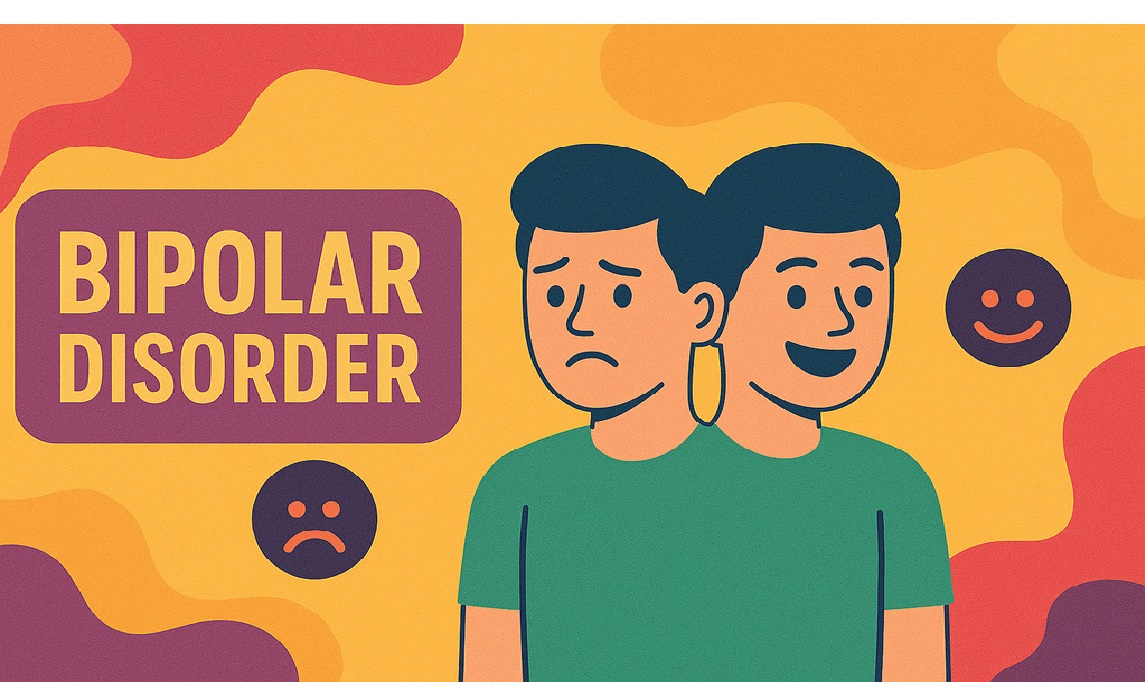
Bipolar disorder is a mental health condition that affects the brain, leading to shifts in mood, energy levels, and daily functioning. Individuals with bipolar disorder go through intense emotional highs and lows—known as mood episodes—that usually last for several days or even weeks.
While everyone experiences changes in mood from time to time, people without bipolar disorder typically have mood shifts that are shorter in duration, often lasting only a few hours. 4
Bipolar disorder is a mood disorder. It leads to cycles of extreme mood swings that go far beyond typical emotional highs and lows Bipolar disorder is a mental illness that causes ‘extreme mood swings’ that include emotional highs (‘mania’ or ‘hypomania’) and lows (‘depression’). ¹,² These mood swings can affect a person’s sleep, energy, activity, judgment, behaviour and the ability to think clearly. ¹,²
During manic or hypomanic phases, a person may feel euphoric, hyperactive, or unusually irritable—sometimes to the point of aggression or delusional thinking. These intense highs are often followed by crushing lows of depression, creating a relentless emotional rollercoaster.
Living with bipolar disorder means riding unpredictable waves of emotion. One moment, you might feel invincible—bursting with joy, energy, and grand ideas (mania). The next, you could crash into overwhelming sadness and emptiness (depression). This stark contrast is why it was once called “manic depression.”
The disorder forces a relentless pendulum swing between two extremes: the soaring highs of mania (or its milder cousin, hypomania), where you might feel either euphoric or irritable to the point of aggression, and the crushing lows of depression. These aren’t just mood swings—they’re seismic shifts that can upend relationships, careers, and self-identity.
Bipolar disorder manifests in three main forms:
- Bipolar I: Defined by severe manic episodes so intense they may require hospitalization, alternating with deep depressive lows.
- Bipolar II: Dominated by depressive episodes punctuated by less extreme hypomanic phases.
- Cyclothymia: A chronic, milder form where mood swings are less severe but nearly constant.
In Bipolar I, the mood swings are particularly extreme—like being thrust from blinding sunlight into pitch darkness, with only brief periods of stability in between.
Both extremes—mania and depression—can severely disrupt daily life, straining relationships, work, and self-care. Bipolar disorder isn’t one-size-fits-all; it’s categorized into three main forms: Bipolar I (extreme mania), Bipolar II (hypomania and severe depression), and Cyclothymic Disorder (chronic, milder mood swings).
person with this disorder will have periods of feeling joyful, energized, and excited (called mania). These are followed by periods of feeling sad and depressed. For this reason, it’s also called manic depression.
People with the illness switch back and forth from mania or hypomania (an emotional state of being energetic and gleeful or sometimes aggressive or delusional) to having episodes of depression.
The symptoms of both depressed and manic episodes are disruptive and impact the quality of life.
The three primary types of bipolar disorder are: bipolar I, bipolar II, and cyclothymic disorder.
-
- Specificity – Names concrete symptoms (hallucinations/delusions)
- Empathy – “Feels unquestionably real” validates the experience
- Urgency – Highlights need for intervention
- Clarity – Defines psychosis while showing its relationship to mania ipolar I – Bipolar I disorder causes dramatic swings between depressed and manic episodes. One may have periods of normal moods in between the extremes. You’ve had at least one manic episode that may be preceded or followed by hypomanic or major depressive episodes that last for at least 7 days to 15 days (nearly every day for most of the day).
In severe manic episodes, the mind can detach from reality entirely—leading to hallucinations, delusions, or paranoid beliefs that feel unquestionably real in the moment. This fractured state, known as psychosis, blurs the line between imagination and truth, often requiring urgent medical care. ¹
- Bipolar I: The Most Severe Form
- Bipolar I represents the most intense manifestation of the disorder, characterized by full manic episodes that often include:
– A complete break from reality (psychosis), including hallucinations or paranoid delusions
– Dangerous behavior severe enough to require hospitalization
– Extreme impulsivity with life-altering consequencesJennifer Payne, M.D., Director of Johns Hopkins’ Women’s Mood Disorders Center , explains: “Mania drives people to chase pleasure without restraint – they might gamble away savings, max out credit cards, abuse substances, or engage in risky sexual behavior. The manic brain dismisses consequences entirely.3
- Bipolar II: The Hidden Struggle
- Cyclothymic disorder : The Stealth Disruptor of Mood DisordersDon’t let “mildest form” fool you—cyclothymia is a persistent emotional turbulence that colors every aspect of life. This chronic condition serves up a relentless seesaw of hypomanic sparks and depressive dips, never severe enough to qualify as full episodes, but constant enough to erode stability.
Imagine living with:
- Recurring bursts of restless energy that never quite crest into hypomania
- Persistent low moods that stop just short of clinical depression
- Years of unpredictable shifts that strain relationships and self-image
While the mood swings may be subtler than in bipolar I or II, their chronic nature creates a unique challenge—like background static that never lets you hear life clearly. Many go undiagnosed for decades, their symptoms written off as “just their personality,” while the cumulative toll of these micro-cycles wears them down.
The cruel paradox? You’re never sick enough to clearly need help, but never well enough to truly thrive. 5
Cyclothymia: When “Mild” Means a Lifetime of Emotional Whiplash
The Diagnostic Odyssey:
- Takes 10-15 years on average to diagnose correctly
- 60% receive at least one wrong diagnosis first (often depression or anxiety)
- Most weather 100+ mood shifts yearly before seeking help
Common Misdiagnoses:
-“Just moody”
– Depressive disorder
– ADHD (during “up” phases)
– Borderline personality disorder
Management Paradoxes:
– Mood stabilizers often help but are harder to justify prescribing
– Therapy focuses on tolerating uncertainty rather than preventing episodes
– Must track subtle patterns most people wouldn’t notice
Borderline Personality Contrast:
• Cyclothymia: Moods shift gradually over days, triggered internally
• BPD: Moods change rapidly (hours), tied to interpersonal stress
The Hidden Toll:
“After 20 years of ‘mild’ symptoms, I’ve had 14 jobs and 3 divorces. Not because any single episode was severe, but because the constant unpredictability wears everything down.” — Anonymous patient
Mood swings are relatively constant, but emotional ups and downs aren’t nearly as intense as those caused by bipolar I or II. Cyclothymic disorder is usually diagnosed if One has two years of disruptive mood swings but the symptoms don’t meet the criteria for bipolar I or II. 1
- Other types. These include, for example, bipolar and related disorders induced by certain drugs or alcohol or due to a medical condition, such as Cushing’s disease, multiple sclerosis or stroke.Some bipolar-like disorders that don’t meet full diagnostic criteria for the above-mentioned disorders because of shorter duration or severity of illness. They may include:
- short-duration hypomanic episodes (two-three days) and major depressive episodes
- hypomanic episodes with insufficient symptoms and major depressive episodes
- These may involve short hypomanic episodes lasting two to three days, along with major depressive episodes, or
- hypomanic episodes that don’t meet the full criteria for diagnosis but still occur alongside major depressive episodes.
symptoms of bipolar disorder
Bipolar disorder causes both depressive and manic symptoms. Some of the common depressive symptoms include:
- Feelings of intense sadness, helplessness, and hopelessness
- Lost interest in previously enjoyed activities
- Feeling worthless or guilty
- Fatigue
- Changes in appetite
- Poor concentration and indecisiveness
- Thoughts of death or suicide
Manic episodes cause symptoms that include:
- Abnormally upbeat, jumpy or wired
- Increases Activities, energy or agitations
- Exaggerated self-esteem, self-confidence (Euphoria)
- Reduced need for sleep
- More talkative than usual
- Easily distracted
- Exhibiting an urge to engage in numerous activities at once
- Risky or impulsive behaviours
- Racing thoughts
- Poor distractibility
- Poor decision-making — for example, going on buying sprees,6
Hypomanic symptoms resemble those of mania but are milder in intensity. Individuals with bipolar II disorder typically experience longer periods of depression compared to episodes of elevated or euphoric mood
The Complex Origins of Bipolar Disorder
While science hasn’t pinpointed a single cause for bipolar disorder, researchers have identified several key contributors that interact in powerful ways:
1. The Genetic Puzzle
- Having a parent or sibling with bipolar disorder increases your risk four to six times
- Scientists have identified 30+ potential genetic markers, but none tells the full story
- Even with genetic risk, most people won’t develop the disorder
2. Brain Chemistry & Structure
- Imbalances in dopamine, serotonin, and glutamate systems
- Visible differences in prefrontal cortex and amygdala activity
- Disruptions in circadian rhythm regulation
3. Environmental Triggers
- Childhood trauma doubles the risk of early-onset bipolar
- Major life stressors (divorce, job loss) often precede first episodes
- Substance use can trigger or worsen symptoms
4. The Perfect Storm
Most experts believe bipolar develops when:
Genetic predisposition + Stressful life events + Neurological factors …converge to disrupt mood regulation
Ongoing Research Frontiers:
- Epigenetics (how environment “switches” genes on/off)
- Gut-brain axis connections
- Early intervention strategies 3
How is bipolar disorder treated : A Multidimensional Approach
While bipolar disorder is a lifelong condition, proper treatment can help individuals achieve stability and reclaim their quality of life. Modern treatment strategies typically involve:
1. Medication Management (The Foundation)
- Mood Stabilizers (e.g., lithium, valproate) – the cornerstone of treatment
- Atypical Antipsychotics – for manic or mixed episodes
- Antidepressants – used cautiously and always with a mood stabilizer
- Newer Options – like lurasidone for bipolar depression
2. Psychotherapy (The Reinforcement)
- Cognitive Behavioral Therapy (CBT): Identifies and changes harmful thought patterns
- Interpersonal Therapy: Improves relationship skills
- Family-Focused Therapy: Educates and involves loved ones in care
3. Lifestyle Modifications (The Support System)
- Regular sleep schedules to maintain circadian rhythms
- Exercise and nutrition plans tailored to energy fluctuations
- Mood tracking to identify early warning signs
4. Emerging & Adjunctive Treatments
- Light therapy for seasonal patterns
- Transcranial Magnetic Stimulation (TMS) for treatment-resistant depression
- Ketamine infusion therapy in severe cases
Why This Approach Works:
- Emphasizes that treatment goes beyond just medication
- Shows the progressive options available at different stages
- Highlights the importance of personalization
- Maintains hope while being realistic about challenges
Key Concept: There’s no “one-size-fits-all” solution. The most effective treatment plans are tailored to the individual’s:
– Specific bipolar type
– Episode frequency and pattern
– Medication tolerance
– Personal life circumstances
Being together with Someone Who Is having Bipolar Disorder
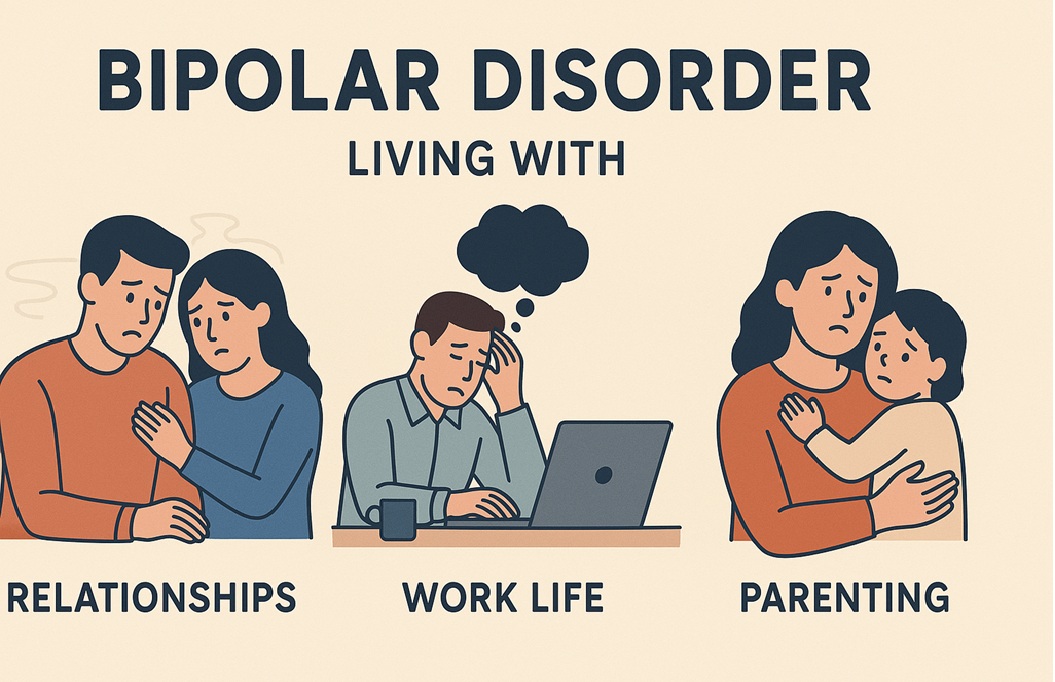
Bipolar disorder is a mental illness so things get difficult for the normal person to gel with. Whether its romantic relationship, colleagues, parenting, bipolar disorder can make things difficult in every walks of life.
Romantic relationship
During manic or hypomanic phases, individuals with bipolar disorder often experience an increased sex drive, which may lead to more frequent sexual activity, including heightened interest in masturbation or pornography.
On the contrary, during episodes of depression, the same partner may avoid sexual contact altogether. This rejection, is diagonally opposite to what he / she opted for during a manic or hypomanic period.
In the office
Work efficiency is affected heavily by bipolar disorder. Severe mood swings, along with manic symptoms such as poor judgement and impulsivity, or depressive symptoms such as low energy and disinterest make it tough to find and maintain a job.. In an extreme case if a person looses his or her job, will lead to financial burden on the family at micro level and on the society on the macro level.
Parenting with Bipolar Disorder: Maintaining Stability Amidst Challenges
Parenting with bipolar disorder requires navigating unique complexities while providing children with needed security. Key considerations include:
Heightened Vulnerability to Stress
- Both positive (birthdays, achievements) and negative stressors can trigger mood episodes in parents with bipolar disorder NAMI 2023
- Sleep deprivation—common in parenting—disrupts circadian rhythms, increasing relapse risk (Harvard Health, 2022)
Impact on Children
- Inconsistent parenting behaviors (over-engagement vs. withdrawal) may cause anxiety or confusion in children (American Psychological Association, 2021)
- Children often internalize a parent’s mood shifts, blaming themselves (Child Mind Institute, 2023)
Strategies for Stability
✅ Routine Reinforcement
- Maintain consistent daily schedules (meals, bedtime) to provide predictability (CDC Parenting Guidelines, 2023)
✅ Open, Age-Appropriate Communication
- Explain mood changes simply: “Sometimes Mom/Dad’s brain gets tired, but it’s not your fault.” (NAMI Family Guide, 2022)
✅ Backup Planning
- Partner with co-parents, relatives, or friends to step in during episodes (Mental Health America, 2023)
Conclusion:
“With proactive management—medication adherence, therapy, and support systems—parents with bipolar disorder can provide nurturing environments. Early, honest conversations help children understand and adapt.” — National Institute of Mental Health, 2023
References
[1] Mayo clinic
[2] Wikipedia
[3] Johns Hopkins Medicine
[4] American Psychiatric Association
[5] National Institute of Mental Health
[6] Signs & Symptoms of Bipolar disorder, Black Dog Institute

Debasis Chaudhuri