
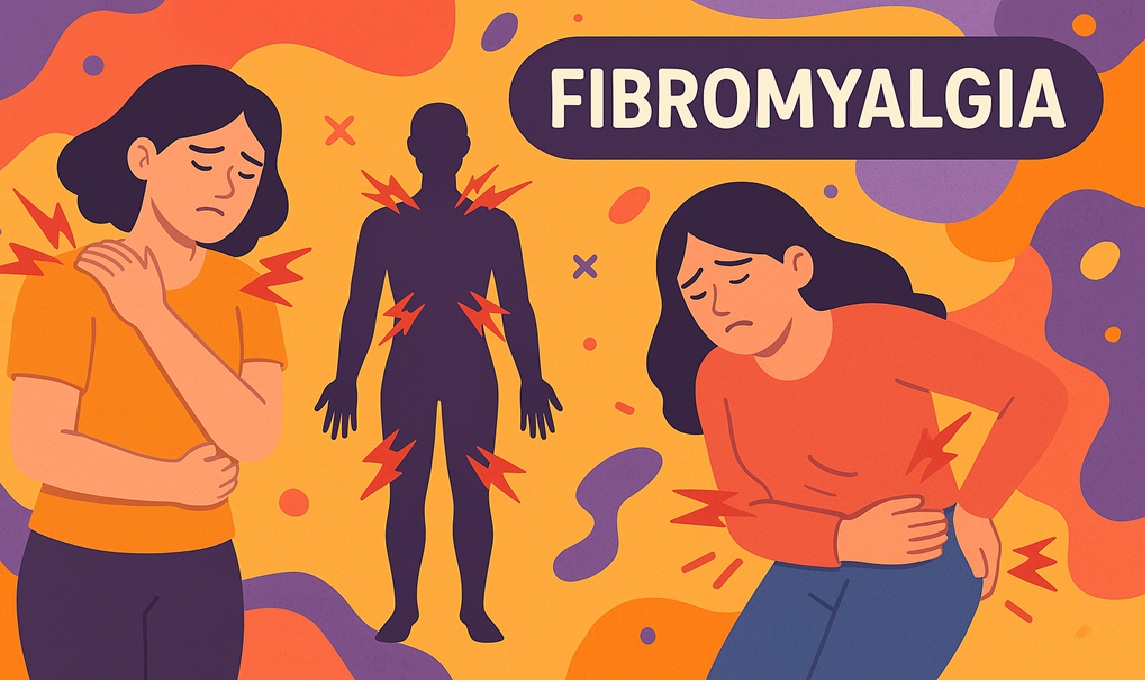
What is Fibromyalgia
Fibromyalgia is a long-term condition characterized by widespread pain, tenderness, fatigue, and sleep disturbances. Experts don’t know what causes fibromyalgia, but studies have found that certain health conditions, stress and other changes in one’s life might trigger it. One might be more likely to develop fibromyalgia if one of the biological parents has it.[1]
Fibromyalgia is sometimes related to mental state and may be a result of mental disorder. Hence one of the causes for Fibromyalgia is mental disorder.
There is no cure for fibromyalgia as such, but doctors and other health care providers can help manage and treat the symptoms. Treatment typically involves a combination of exercise or other movement therapies, psychological and behavioural therapy, and medications.[2]
Though the exact cause is unknown, but it’s believed that fibromyalgia amplifies painful sensations by affecting the way human brain and spinal cord (i.e., the central nervous system) process painful and non-painful signals. Therefore sometimes, it referred to as a nerve or neurological disorder.
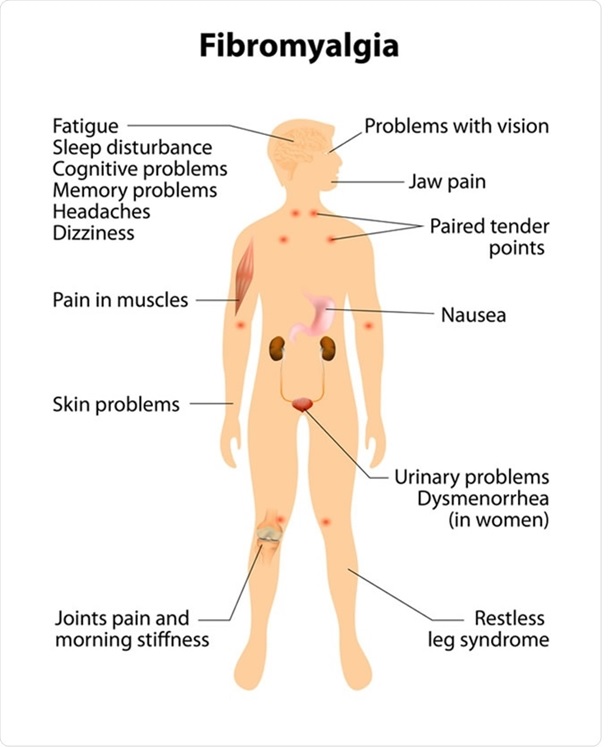
Signs and Symptoms of Fibromyalgia. Image Credit: Designua / Shutterstock. News Medical Life sciences[6]
What are the warning signs of Fibromyalgia
Widespread pain and persistent fatigue are the two hallmark symptoms of fibromyalgia
Debilitating pain was among the earliest and most frequent complaints. Some described it as a flu-like malaise, while others reported a cascade of symptoms—headaches, muscle stiffness, nausea, digestive issues, crushing fatigue, insomnia, unexplained rashes, easy bruising, and cognitive struggles and forgetfulness (or ‘brain fog’), —all compounding the relentless pain. For many, the pain starts in a single region before gradually affecting the entire body.[5]
Fibromyalgia: Key Symptoms
Primary Symptoms:
- Chronic widespread pain – Typically affects multiple areas (arms, legs, head, chest, back, etc.), often described as deep aching, burning, or throbbing.
- Severe fatigue – Persistent exhaustion that rest does not relieve.
- Sleep disturbances – Difficulty falling or staying asleep, leading to unrefreshing rest.
Common Additional Symptoms:
- Muscle and joint stiffness, especially in the morning
- Increased tenderness to pressure (even light touch may feel painful)
- Facial/jaw pain (sometimes resembling TMJ disorders)
- Frequent headaches or migraines
- Unusual tingling or numbness in hands and feet (often described as ‘pins and needles’)
- Cognitive difficulties (“fibro fog”) – trouble concentrating, memory lapses
- Sensory hypersensitivity – heightened reactions to light, noise, smells, or temperature changes
- Digestive problems – including IBS-like symptoms (bloating, diarrhea, constipation).[4]
Symptoms often appear following a triggering event, such as physical trauma, surgery, infection, or severe psychological stress. However, in some cases, they develop gradually without any clear initiating cause.
While fibromyalgia can occur in anyone, women are disproportionately affected.. Many individuals with the condition also experience associated disorders, including tension headaches, temporomandibular joint (TMJ) dysfunction, irritable bowel syndrome (IBS), anxiety, and depression.[3]
What are the risk factors for fibromyalgia
Known risk factors include:4
- Age – While fibromyalgia can occur at any age—even in childhood—it is most commonly identified in adults over 40.
- Lupus or Rheumatoid Arthritis – Lupus or Rheumatoid arthritis (RA), may lead to develop fibromyalgia.
- Chronic Illness – These may include mood disorders like depression and anxiety, joint diseases such as arthritis, and digestive issues like irritable bowel syndrome (IBS),
- Stress – Possible triggers
- Fibromyalgia is often triggered by an event that causes physical stress or emotional (psychological) stress. Possible triggers include:
- Significant bodily harm from events like automobile crashes
- microbial infections like Epstein-Barr and Borrelia burgdorferi (Lyme disease)
- having a major operation
- Intense emotional suffering, often seen in individuals returning from active war service
For many patients, fibromyalgia appears gradually without a clear initiating factor.[15]
Fibromyalgia Symptoms and Associated Disorders Overview
Infections – Fibromyalgia syndrome (FMS),represents a chronic pain disorder manifesting as generalized musculoskeletal discomfort and abnormal tenderness at multiple anatomical sites.
Fibromyalgia syndrome (FMS) is currently classified among central sensitivity syndromes, reflecting its neurological basis in pain processing dysfunction. A combination of hereditary factors and environmental conditions influences the development of fibromyalgia. Multiple precipitating factors have been identified, ranging from physical injuries and psychological distress to microbial infections.
Notable infectious agents including hepatotropic viruses, retroviruses (specifically HIV), and spirochetal bacteria (Borrelia burgdorferi) have demonstrated chronological correlations with FMS onset. Emerging research suggests potential associations between immunization procedures and fibromyalgia-like symptom complexes, though current evidence remains preliminary and requires rigorous validation through controlled longitudinal studies..[16]
Trama – People who’ve experienced a physical or emotional trauma or a serious injury sometimes develop fibromyalgia
Some other factors are likely associated with the onset of fibromyalgia,. These possible risk factors include:
- Women are twice as likely to have fibromyalgia as men.
- Stressful or traumatic events – including car accidents or post-traumatic stress disorder (PTSD).
Repetitive stress injuries – caused by overuse of a joint, such as frequent knee bending.
Illnesses – such as viral infections. - Family history
- Obesity
but more research is needed to see if they are real or not.
What triggers a fibromyalgia flare-up
Incidence of Fibromyalgia fluctuates. Sometimes, the pain or the other symptoms are intense and sometimes mild.
Certain events or changes in life pattern can trigger a fibromyalgia flare-up. Everyone is different, and what triggers symptoms for some people might not for you. In general, anything that increases the stress factors can trigger a flare-up, including:
- Emotional stress caused in the job, financial situation or social life.
- Changes in daily routine.
- Changes in diet or not getting enough nutrition.
- Hormone changes.
- Not getting enough sleep or changing when one sleeps.
- Weather or temperature changes.
- Getting sick.
- Starting new medication or treatments, or changing something in usual fibromyalgia treatment routine. [9]
Does Fibromyalgia ever go away
Fibromyalgia is common sometimes in rheumatic disease and complicates diagnoses and therapy. These disorders include:
- Rheumatoid arthritis
- Osteoarthritis
- Spondyloarthritis
- Systemic lupus erythematosus
To be diagnosed with fibromyalgia, you must have had at least 3 months of widespread pain with one or more of the following:
- Ongoing problems with sleep
- Fatigue
- Thinking or memory problems(Fibro Fog) [7]
To meet the criteria for Fibromyalgia, one must have pain in at least four of these five areas:
- Left upper region, including shoulder, arm or jaw
- Right upper region, including shoulder, arm or jaw
- Left lower region, including hip, buttock or leg
- Right lower region, including hip, buttock or leg
- Axial region, which includes neck, back, chest or abdomen[8]

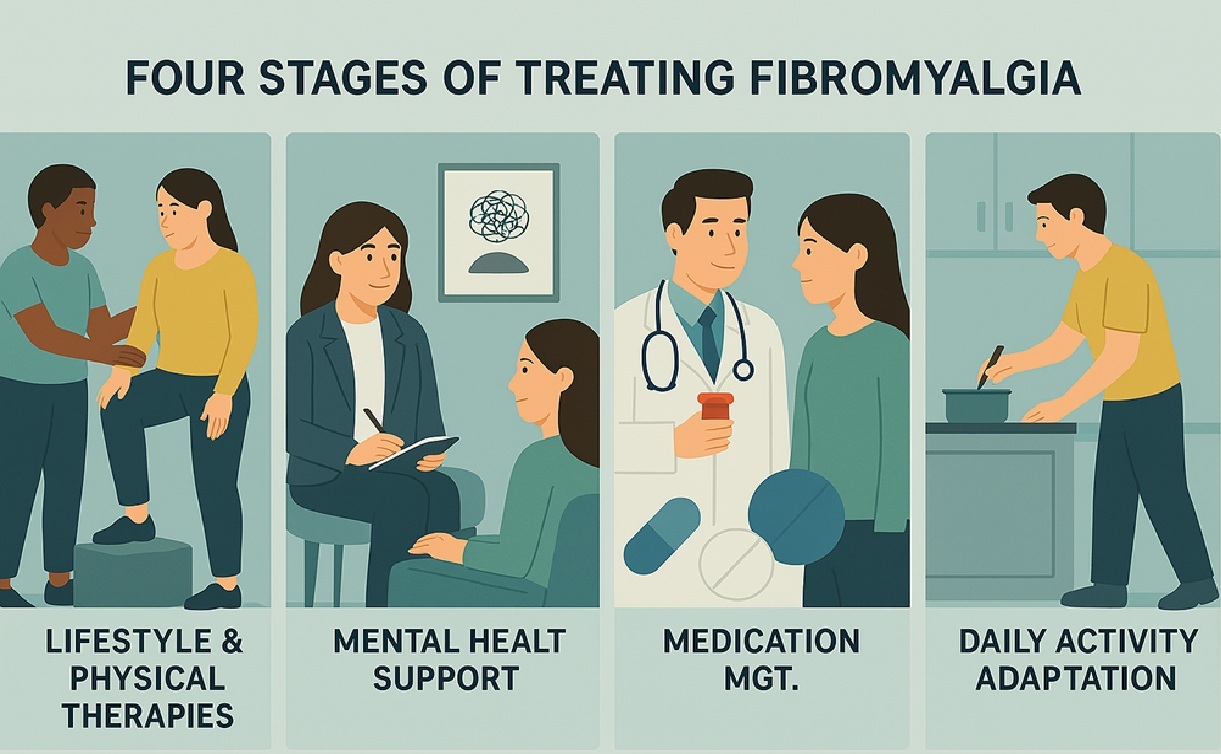
Understanding Fibromyalgia Management
Fibromyalgia is an unpredictable condition with symptoms that vary in timing and intensity from person to person. Since its manifestations differ for each individual, treatment requires a flexible, multi-phase approach tailored to the patient’s current needs.
The Four-Phase Treatment Approach: (see the figure above)
- Lifestyle and Physical Therapies
- Guided by physical therapists, patients learn targeted stretches and exercises to improve mobility, reduce muscle tension, and enhance joint function.
- Mental Health Support
- Psychologists or counselors provide tools to maintain emotional wellbeing, helping patients develop coping mechanisms for symptom-related stress and self-image challenges.
- Medication Management
- Doctors may prescribe medications to help control pain, improve sleep, and address other specific symptoms.
- Activity Adaptation
- Occupational therapists assist patients in modifying daily tasks and routines when symptoms significantly impact their ability to perform normal activities.
This staged approach allows for personalized care that evolves with the patient’s changing symptoms and needs. [11]
What are the best treatments for Fibromyalgia
At this time, there is no cure for fibromyalgia. However, there are ways to manage the pain and other symptoms. Pain management specialists understand the full range of pain relief options, including how to use them in combination to achieve a successful outcome.
As a medical doctor, anaesthesiologists specialize in pain control, and some focus their practices on treating patients with chronic pain. Ask your doctor about a referral to an anaesthesiologist who specializes in treating chronic pain.
Treatment options generally fall into three categories: medicines, lifestyle changes, and complementary therapies.
Medicines
- Nonsteroidal anti-inflammatory drugs such as aspirin,
- Muscle relaxants
- Steroids
- Pregabalin
- Duloxetine or milnacipran
- IV infusions of lidocaine
- Low-dose naltrexone
- Tricyclic antidepressants like amitriptyline and nortriptyline
Lifestyle Strategies
Research-supported approaches to symptom management include:
- Regular Physical Activity
- Studies, including those by the NIH, confirm that consistent exercise is among the most impactful interventions for symptom relief.
- Sleep Optimization
- Establishing structured bedtime routines and improving sleep hygiene can enhance restorative rest.
- Anti-Inflammatory Nutrition
- Emphasizing whole foods known to reduce systemic inflammation while identifying and eliminating potential dietary triggers.
- Tobacco Cessation
- Eliminating smoking, which may exacerbate symptoms.
- Stress Reduction Practices
- Incorporating mind-body techniques such as meditation, yoga, or mindfulness training.
- Activity Pacing
- Modifying work tasks and daily activities to balance energy expenditure.
Integrative Treatment Approaches
Several complementary modalities may help manage symptoms alongside conventional treatments:
- Traditional Chinese Medicine Techniques
- Acupuncture therapy
- Qi gong energy practice
- Manual Therapies
- Therapeutic massage
- Chiropractic adjustments
- Mind-Body Practices
- Tai chi movement therapy
- Cognitive behavioral therapy (CBT)
- Natural Supplements
- Evidence-based herbal formulations [12]
Is fibromyalgia real
YES. Research confirms that fibromyalgia represents a significant worldwide health concern. Epidemiological studies estimate its global prevalence at approximately 5% of the population. In the United States, prevalence rates range between 2-10% across all age groups. The United Kingdom reports similar patterns, with nearly 1.76 million diagnosed adults in England and Wales alone.
Key Statistics:
- Worldwide: Affects roughly 5% of global population
- United States: Impacts 2-10% of Americans
- UK: Affects approximately 1.76 million adults in England/Wales
Clinical Significance:
These prevalence rates demonstrate fibromyalgia’s status as a common chronic pain disorder requiring increased awareness and healthcare resources across nations.
Why This Matters:
The condition’s widespread occurrence highlights the need for:
- Improved diagnostic methods
- Expanded treatment options
- Greater research funding
This version:
- Presents data in a structured format
- Adds contextual analysis
- Uses varied phrasing
- Provides interpretation of statistics
- Avoids direct copying of source material [13]
Fibromyalgia in women and men
Gender Differences in Fibromyalgia Prevalence
Clinical research consistently shows a striking gender disparity in fibromyalgia cases, with female patients representing the majority of diagnoses. Epidemiological data reveal women are:
- 2-3 times more likely to develop the condition than men
- 7-9 times more frequently diagnosed in clinical settings
- Typically diagnosed between ages 20-50 (peak reproductive years)
Potential Contributing Factors:
- Biological: Hormonal fluctuations, genetic predispositions
- Diagnostic: Potential gender bias in pain perception assessment
- Sociocultural: Differences in healthcare-seeking behaviors
Clinical Implications:
This pronounced gender gap underscores the need for:
- Gender-specific treatment approaches
- Enhanced physician awareness of presentation differences
- Targeted research into biological mechanisms
While fibromyalgia can occur in both sexes, women are disproportionately affected—studies suggest they are up to seven times more likely to develop the condition than men. Prevalence rates indicate that approximately 3.4% of women are diagnosed with fibromyalgia, compared to only 0.5% of men.
Fibromyalgia is recognized as a chronic pain disorder, and its origins are thought to involve dysfunction in the central nervous system. Advanced imaging techniques, such as magnetic resonance imaging (MRI), have revealed structural and functional changes in the brain regions that process pain. These alterations may cause the nervous system to amplify normal sensory signals, leading to the perception of pain without any clear physical source.
Individuals living with fibromyalgia typically experience widespread muscle pain and tenderness. This is often accompanied by a range of other symptoms, including profound fatigue, emotional disturbances such as anxiety or depression, recurrent headaches, sleep difficulties, and cognitive issues often referred to as “fibro fog.”
While the precise cause of fibromyalgia is still unclear, its tendency to occur in multiple family members points to a possible genetic link
While there is no cure, several treatment strategies can help manage the symptoms. These include medications, cognitive behavioral therapy (CBT), regular physical activity, and techniques to reduce stress.
References :-
[1] ^ Fibromyalgia, Cleveland clinic
[2] ^ National Institute of Arthritis and Musculoskeletal and Skin Diseases
[4] ^ Centre for Disease Control and Prevention
[6] ^ Image credit, News Medical Life Sciences, By Dr. Sanchari Sinha Dutta, Ph.D.Reviewed by Dr. Jennifer Logan, MD, MPH
[7] ^ Exam and test, Mount Sinai health library
[8] ^ Diagnosis of Fibromyalgia, Mayo clinic
[9] ^ Fibromyalgia, Cleveland clinic
[10] ^ Image Credit, Mount Sinai
[11] ^ Four stages of Fibromyalgia, Cleveland clinic
[12] ^ best treatment, American Society of Anaesthesiologist
[13] ^ Fibromyalgia Epidemiology, Dr. Ananya Mandal, MD, Reviewed by April Cashin-Garbutt, MA (Editor)
[14] ^ by Hope Ricciotti, M.D., and Hye-Chun Hur, M.D., M.P.H. Editors in Chief, Harvard Women’s Health Watch
[15] ^ Causes, National Health Service, NHS UK

Debasis Chaudhuri